
Fatima al-Fahiri and The Al-Qarawiyyin University
Profile
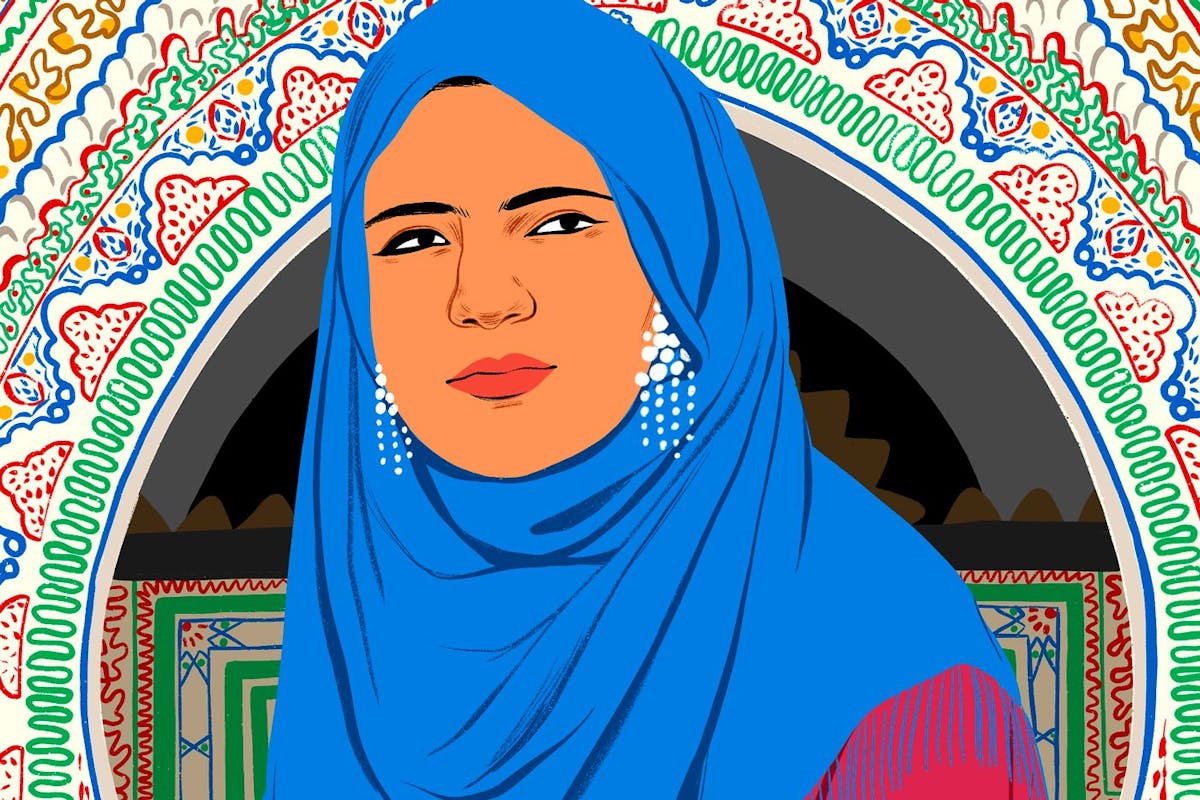
Life: 800 C.E. – 880 C.E. (Died aged 80)
Known for: Establishing the oldest existing and currently operating educational institution to award degrees
[1][2]
Who was Fatima al-Fahiri?
Al-Fihiri was born in 800 CE in Qayrawan (now known as Kairouan, now part of modern Tunisia) under the Abbasid Caliphate (the third of the Islamic caliphates to succeed the prophet Muhammed.) Sometime in the early 9th century, her and her family moved to the city of Fez in Morocco. Her family was not affluent in the slightest, however with a lot of persistence, her father (Mohammed al-Fahiri) worked hard to become a successful businessman. Her parents understood the importance of education and both Fatima and her sister Maryam attended school and received a good education: she was highly literate and knowledgeable about her faith, having learned the Islamic jurisprudence Fiqh – the theory and philosophy of divine Islamic law.
[1][2][3][4]
Life and accomplishments
When her father passed away, Fatima inherited a large fortune, and in 859 AD she used this fortune to found a mosque and educational institution in order to benefit her local community. The establishment blossomed into the University of al-Qarawiyyin – named after Fatima’s birthplace, Qayrawan. It speaks volumes about Fatima’s benevolence that she decided to not spend her inheritance on merely herself or her own family but to use it further the future of her own community and people – and the impact the institution she developed had on the world was and is enormous. It is interesting to note that that women in the Middle East were frequently patrons and sponsors of mosques, educational establishments and other architectural works.
[3][4]
This was especially true during the Kadinlarin Saltanari (The Sultanate of Women), a period of massive political influence exerted by wives of the Sultans of the Ottoman Empire – and Fatima’s achievement was a much earlier example of this. Fatima passed away in 880 AD aged 80 in Fez, and right up until she passed she continued to devote herself to her university and her library.
[1][5][6]
What was the University of al-Qarawiyyin?

[6][13]
Along with teaching the Qur’an and the Fiqh, the university also taught courses in grammar, rhetoric, logic, medicine and astronomy. The Spanish-Arab astronomer al-Bitruji also taught at al-Qarawiyyin: al-Bitruji is famous for proposing theories on planetary motion and criticising Ptolemey’s Almagest, and in his writings he offered the first non-Ptolemaic astronomical system.
[9]
In addition, the twelfth century cartographer Mohammed al-Idrisi, whose maps were used by European explorers during the Renaissance is also believed to have attended al-Qarawiyyin, due to him having lived in Fez for quite some time.
[7][11]
Another notable scholar who is said to have studied at the university is Ibn al-Khatib, an Andalusian-Arab polymath, who in his work explored the idea of transmission of disease through contagion, centuries before Louis Pasteur conducted his experiments in Europe.
[10]
A number of scholars from the West also studied at the university, including Pope Sylvester II and Jacob Golius, a mathematician and Orientalist from the Netherlands who studied Arabic, and is said to have read parts of the mathematical Arabic texts he studied and collected to the philosopher Rene Descartes.
[1][12]
Due to the military occupation of Morocco by France, it became a French protectorate in 1912, and Al-Qarawiyyin saw a decline in attendance along with a rigidly divided student body. The student body declined to a mere 300 in 1922 due to Moroccan elite deciding to send their children to new found more Westernized colleges and institutes.
However in 1947, Al- Qarawiyyin was properly integrated into the educational system, but only after independence from France in 1963 was the madrasa able to transform into a university under the supervision of the Ministry of Education.
[6][8]
The University of Al-Qarawiyyin is a remarkable and important institution and according to UNESCO and many other scholars, it is the oldest university in the world. For such an important institution, it has very little recognition throughout the West – but this institution is crucial to how the West developed its own institutions of higher education. It speaks volumes that not only Arabic academics studied there but academics from all over Europe as well: and we have the woman of colour, Fatima al-Fihiri, to thank for all of it. Her story is one which rings true to the age old Islamic tradition of the pursuit of learning and the good that can be done by serving as a benefactor to humanity. We in academia should never forget where our roots lie!
References:
References are categorised by the following types:
🗒️= Written
🎧= Audio
💻= Video
[1] 🗒️Wikipedia:
https://en.wikipedia.org/wiki/Fatima_al-Fihri
[2] 🗒️Girlboss article:
https://www.girlboss.com/identity/2018-3-27-fatima-al-fihri-history
[3] 🗒️Quartz article:
[4] 🗒️Morocco world news article:
[5]🗒️Wikipedia article on the Kadinlarin Saltanari
https://en.wikipedia.org/wiki/Sultanate_of_Women
[6]🗒️Wikipedia article on the University of al-Qarawiyyin:
https://en.wikipedia.org/wiki/University_of_al-Qarawiyyin
[7]🗒️ Encylopedia.com article on al-Idrisi:
https://www.encyclopedia.com/science/dictionaries-thesauruses-pictures-and-press-releases/al-idris
[8]🗒️ WhyIslam.org article on Fatima al-Fihiri and al-Qarawiyyin
https://www.whyislam.org/muslim-heritage/fatima-al-fihri-founder-of-worlds-very-first-university/
[9]🗒️ Link to excerpt containing information on al-Bitruji:
Samsó, Julio (2007). “Biṭrūjī: Nūr al‐Dīn Abū Isḥāq [Abū Jaʿfar] Ibrāhīm ibn Yūsuf al‐Biṭrūjī”. In Thomas Hockey; et al. (eds.). The Biographical Encyclopedia of Astronomers. New York: Springer. pp. 133–4. ISBN 978-0-387-31022-0. (PDF version)
[10]🗒️ Wikipedia article on al-Khatib:
https://en.wikipedia.org/wiki/Ibn_al-Khatib
[11]🗒️ Wikipedia article on al-Idrisi:
https://en.wikipedia.org/wiki/Muhammad_al-Idrisi
[12]🗒️ Book on POC empires in Europe:
Scott, S.P. (1904), History of the Moorish Empire in Europe (Vol. 3), Philadelphia: Lippincott, pp. 461–462
[13]🗒️ Book on prayer and education in the Islamic period:
Abun-Nasr, Jamil M. (1987-08-20). A History of the Maghrib in the Islamic Period. Cambridge University Press. p. 114. ISBN 978-0-521-33767-0
[14]🗒️ Stylist.com article on al-Fihiri:
[15]🗒️ Blogspot article on al-Qarawiyyin:
https://photoshamzik.blogspot.com/2017/08/the-oldest-university-in-world-al.html
Additional Resources
[1]💻 The world’s oldest library: inside al-Qarawiyyin | Literature | Showcase
Authors Note:
I learnt a lot writing this article – it genuinely made me reframe how I view institutions of learning and how they are tied with faith (as the University of Al-Qarawiyyin certainly was). I also learnt a lot about the role of women in society during the Ottoman Empire and also about Arabic and Islamic scholars and their work – this article was a pleasure to research and write!
For more information on POC scientists please visit our resources page or read through the rest of our blog. We are constantly updating both.
Written by Pruthvi Mehta. For more information see the about page or follow her on Twitter @q_the_ordinary.
 POC Squared
Leave a Reply